

کتاب Focus on vocabulary جلد 2
chapter 13
لغات هدف
| English | Persian |
|---|---|
| abandon | رها کردن، ترک کردن |
| devote | اختصاص دادن، وقف کردن |
| input | ورودی، داده |
| prohibitive | منع کننده، گران |
| adjacent | مجاور، نزدیک |
| diminish | کاهش یافتن، کم شدن |
| minimize | به حداقل رساندن |
| region | منطقه |
| annual | سالانه |
| duration | مدت زمان |
| nevertheless | با این حال |
| terminate | خاتمه دادن، تمام کردن |
| benefit | فایده، منفعت |
| expansion | گسترش، توسعه |
| occur | رخ دادن |
| ultimate | نهایی، آخرین |
| cite | استناد کردن، ذکر کردن |
| expert | کارشناس |
| outcome | نتیجه، عاقبت |
| virtually | عملاً، تقریبا |
| volume | حجم، صدا |
| conduct | انجام دادن، هدایت کردن |
| inevitable | اجتنابناپذیر |
| predict | پیشبینی کردن |
The Aral Sea, located in the deserts between Kazakhstan and Uzbekistan, is the site of one of the largest man-made environmental disasters of modern times.
دریای آرال، واقع در بیابانهای میان قزاقستان و ازبکستان، محل یکی از بزرگترین فجایع زیستمحیطی انسانی در دوران معاصر است.
Poor agricultural planning has robbed the Aral of virtually all of its inflowing river water, which has caused it to shrink to a salty, lifeless lake.
برنامهریزی نادرست کشاورزی تقریباً تمام آب ورودی رودخانهها به آرال را قطع کرده و باعث شده این دریاچه به یک پهنه آبی شور و بیجان تبدیل شود.
In 1960, the Aral was the world's fourth largest inland body of water, behind the Caspian Sea, Lake Superior, and Lake Victoria.
در سال ۱۹۶۰، دریای آرال چهارمین پهنه آبی داخلی بزرگ جهان پس از دریای خزر، دریاچه سوپریور و دریاچه ویکتوریا بود.
It covered 68,000 km² with a volume of 1,090 km³ and an average salt content of about 10 grams per liter.
این دریاچه ۶۸٬۰۰۰ کیلومتر مربع وسعت داشت، حجم آن ۱٬۰۹۰ کیلومتر مکعب بود و شوری متوسط آن حدود ۱۰ گرم در لیتر بود.
By 1998, the sea's area had decreased to 28,687 km², its volume had diminished to 181 km³, and its average salinity had risen to around 45 grams/liter.
تا سال ۱۹۹۸، وسعت دریا به ۲۸٬۶۸۷ کیلومتر مربع کاهش یافت، حجم آن به ۱۸۱ کیلومتر مکعب رسید و شوری آن به حدود ۴۵ گرم در لیتر افزایش یافت.
By 2010, it is estimated that it will shrink to an area of 21,058 km² and a volume of about 124 km³ and that it will have a salt content of nearly 70 grams/liter.
تخمین زده میشد که تا سال ۲۰۱۰، وسعت آن به ۲۱٬۰۵۸ کیلومتر مربع و حجم آن به حدود ۱۲۴ کیلومتر مکعب کاهش یابد و شوری آن به حدود ۷۰ گرم در لیتر برسد.
Some experts predict that the Aral will dry up completely by 2020.
برخی کارشناسان پیشبینی میکردند که دریای آرال تا سال ۲۰۲۰ بهطور کامل خشک خواهد شد.
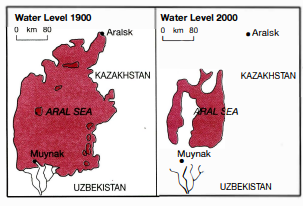
What caused the Aral Sea to shrink to less than half its size?
چه چیزی باعث شد دریای آرال به کمتر از نیمی از اندازه اولیهاش کوچک شود؟
Both weather and human involvement have contributed to the Aral's shrinkage.
هم عوامل طبیعی (آبوهوا) و هم دخالتهای انسانی در کوچک شدن دریای آرال نقش داشتهاند.
A drought in the 1970s, particularly between 1974 and 1975, lowered the amount of river water flowing into the Aral Sea by around 27 percent, compared to the average during the preceding forty-five years.
خشکسالی دهه ۱۹۷۰، بهویژه بین سالهای ۱۹۷۴ تا ۱۹۷۵، میزان آب ورودی رودخانهها به دریای آرال را حدود ۲۷ درصد نسبت به میانگین ۴۵ سال قبل کاهش داد.
The 1982-to-1986 period also had low river flows.
دوره ۱۹۸۲ تا ۱۹۸۶ نیز با جریان کم رودخانهها همراه بود.
Nevertheless, the main cause of the Aral's shrinkage was the massive amount of water taken from its "feeder" rivers for farming.
با این حال، دلیل اصلی کوچک شدن دریای آرال برداشت عظیم آب از رودخانههای تغذیهکننده آن برای کشاورزی بود.
The area around the lake is dry, and virtually all of the river water that once fed the Aral has been diverted to irrigate the surrounding fields of cotton and rice.
منطقه اطراف دریاچه خشک است و تقریباً تمام آب رودخانههایی که زمانی آرال را تغذیه میکردند، برای آبیاری مزارع پنبه و برنج اطراف منحرف شدهاند.
The end result is that since the mid-1980s, very little river water has reached the lake.
نتیجه این است که از اواسط دهه ۱۹۸۰، مقدار بسیار کمی آب رودخانه به دریاچه رسیده است.
Without any input of new water, the lake is rapidly drying up.
بدون ورودی آب جدید، دریاچه بهسرعت در حال خشک شدن است.
For thousands of years, irrigation had been practiced on the Amu Darya and Syr Darya rivers that feed the Aral Sea.
هزاران سال است که کشاورزی آبی در رودخانههای آمودریا و سیردریا که دریای آرال را تغذیه میکنند، انجام میشده است.
In the 1950s and 1960s, the amount of water diverted for irrigation greatly increased.
در دهههای ۱۹۵۰ و ۱۹۶۰، میزان آبی که برای آبیاری منحرف میشد بهشدت افزایش یافت.
In 1900, approximately 3 million hectares were under irrigation in the Aral Sea basin.
در سال ۱۹۰۰، حدود ۳ میلیون هکتار از حوضه آبریز آرال تحت آبیاری قرار داشت.
This amount grew to 5 million by 1960, and by 1980, the irrigated area in the Aral Sea basin had grown to nearly 6.5 million hectares.
این مقدار تا سال ۱۹۶۰ به ۵ میلیون هکتار و تا سال ۱۹۸۰ به حدود ۶.۵ میلیون هکتار افزایش یافت.
When Soviet planners began this major expansion of irrigation in the Aral Sea basin, conducted in the 1950s and 1960s, it was predicted that increased irrigation would reduce the amount of water flowing to the sea and substantially reduce its size.
زمانی که برنامهریزان شوروی در دهههای ۱۹۵۰ و ۱۹۶۰ این گسترش عمده آبیاری را در حوضه آرال آغاز کردند، پیشبینی شد که افزایش آبیاری باعث کاهش میزان آب ورودی به دریاچه و در نتیجه کاهش چشمگیر اندازه آن خواهد شد.
At the time, a number of experts saw the potential shrinkage of the Aral as a worthwhile tradeoff: A cubic meter of river water used for irrigation would bring far more value than the same cubic meter delivered to the sea.
در آن زمان، برخی کارشناسان کوچک شدن احتمالی دریای آرال را بهعنوان یک معاملهی ارزشمند میدیدند: یک متر مکعب آب رودخانه که برای آبیاری استفاده میشد، ارزش اقتصادی بسیار بیشتری نسبت به همان مقدار آب که به دریاچه میریخت، ایجاد میکرد.
This calculation was based on a simple comparison between economic gains from irrigated agriculture and economic benefits from the sea.
این محاسبه بر اساس مقایسهای ساده بین منافع اقتصادی کشاورزی آبی و منافع اقتصادی حاصل از دریا انجام شده بود.
Indeed, the ultimate shrinkage of the Aral to a relatively small, salty lake—as all its inflow was devoted to agriculture and other economic needs—was viewed at the time as both desirable and inevitable.
در واقع، کوچک شدن نهایی دریای آرال به یک دریاچه شور و نسبتاً کوچک—در حالی که تمام آب ورودی آن به کشاورزی و نیازهای اقتصادی دیگر اختصاص یافته بود—در آن زمان امری هم مطلوب و هم اجتنابناپذیر تلقی میشد.
However, the Soviet planners did not fully understand the consequences of their actions, and there have been three devastating outcomes as a result of the sea's shrinkage.
با این حال، برنامهریزان شوروی بهطور کامل پیامدهای اقدامات خود را درک نکردند و در نتیجه کوچک شدن دریاچه، سه پیامد ویرانگر به وجود آمد.
First, much of the exposed lake bottom is salt-covered.
اول، بخش زیادی از کف دریاچه که اکنون در معرض هوا قرار گرفته، با نمک پوشیده شده است.
Winds have blown this salty dust over a huge amount of the farmland supplied by the irrigation water, and this has negatively affected the farm harvests.
بادها این گرد و غبار شور را به وسعت زیادی از زمینهای کشاورزیای که از آب آبیاری بهرهمند میشوند منتقل کردهاند، و این امر بر محصولات کشاورزی تأثیر منفی گذاشته است.
Traces of Aral salt have been found as far away as 1,000 km to the southeast of the sea, in Georgia on the Black Sea coast, and even along the arctic shore of Russia.
ردپای نمک آرال تا ۱٬۰۰۰ کیلومتر دورتر، در جنوبشرق دریا، در گرجستان در ساحل دریای سیاه، و حتی در سواحل شمالگان روسیه نیز یافت شده است.
Soviet scientists began reporting major dust storms in the area in 1975, with up to ten major storms occurring per year in the period between 1975 and 1981.
دانشمندان شوروی از سال ۱۹۷۵ شروع به گزارش طوفانهای شدید گرد و غبار در این منطقه کردند، و در فاصله سالهای ۱۹۷۵ تا ۱۹۸۱ تا ده طوفان بزرگ در سال رخ میداد.
Observations by Soviet cosmonauts indicated that the frequency and size of the storms grew as the Aral continued to decline.
مشاهدات کیهاننوردان شوروی نشان داد که با ادامه کاهش وسعت آرال، تعداد و شدت طوفانها نیز افزایش یافته است.
Overall, an estimated 43 million metric tons of salt are carried from the sea's dried bottom annually and deposited over an adjacent area as wide as 150,000 to 200,000 km².
در مجموع، تخمین زده میشود که سالانه حدود ۴۳ میلیون تُن نمک از کف خشکشده دریاچه آرال جابهجا شده و در منطقهای به وسعت ۱۵۰٬۰۰۰ تا ۲۰۰٬۰۰۰ کیلومتر مربع اطراف آن تهنشین میشود.
Second, changes in the Aral Sea have had adverse effects on the region's climate.
دوم، تغییرات در دریای آرال تأثیرات منفی بر اقلیم منطقه داشته است.
Research has established that the Aral affects temperature and moisture conditions in surrounding lands.
تحقیقات نشان دادهاند که دریاچه آرال بر شرایط دما و رطوبت در زمینهای اطراف خود تأثیر میگذارد.
As the sea has contracted, its beneficial influence on climate has substantially diminished.
با کاهش اندازه دریا، تأثیر مثبت آن بر اقلیم بهطور قابلتوجهی کاهش یافته است.
The summers have become warmer, winters cooler, spring thaws later, and fall frosts earlier.
تابستانها گرمتر، زمستانها سردتر، آب شدن برفهای بهاری دیرتر و یخبندانهای پاییزی زودتر شدهاند.
As a result, the duration of the crop-growing season has shortened.
در نتیجه، مدت زمان فصل رشد محصولات کشاورزی کوتاهتر شده است.
For example, the growing season in the Amu Darya delta just south of the sea has been reduced by an average of 10 days, forcing cotton farmers there to terminate cotton production and switch to growing rice.
برای مثال، فصل رشد در دلتا آمودریا که درست جنوب دریا قرار دارد، بهطور میانگین ۱۰ روز کاهش یافته است، که باعث شده کشاورزان پنبه در آنجا تولید پنبه را متوقف کرده و به کشت برنج روی آورند.
Third, as the sea has shrunk and become more salty, commercial fishing has been destroyed.
سوم، با کوچک شدن دریا و افزایش شوری آن، ماهیگیری تجاری نابود شده است.
By the early 1980s, twenty of twenty-four native fish species had disappeared and the commercial catch (48,000 metric tons in 1957) had fallen to zero.
تا اوایل دهه ۱۹۸۰، بیستوچهار گونه از بیستوچهار گونه ماهی بومی ناپدید شدند و صید تجاری (۴۸٬۰۰۰ تُن در سال ۱۹۵۷) به صفر رسید.
Employment directly and indirectly related to Aral fishery, reportedly 60,000 jobs in the 1950s, has disappeared.
اشتغال مستقیم و غیرمستقیم مرتبط با صنعت ماهیگیری آرال، که گفته میشود در دهه ۱۹۵۰ حدود ۶۰٬۰۰۰ شغل بوده، از بین رفته است.
Because of the end of commercial fishing and other harmful consequences of the sea's drying, tens of thousands of people have abandoned the cities and villages on the Aral's coast.
بهدلیل پایان ماهیگیری تجاری و سایر پیامدهای مضر خشک شدن دریا، دهها هزار نفر از شهرها و روستاهای ساحلی آرال مهاجرت کردهاند.
For those people who remain, the drinking water is a major problem.
برای افرادی که باقی ماندهاند، آب آشامیدنی یکی از مشکلات عمده است.
The declining quality of the drinking water is cited as the main factor in the increase in respiratory ailments, cancer, and other illnesses in the region, particularly among children.
کاهش کیفیت آب آشامیدنی بهعنوان عامل اصلی افزایش بیماریهای تنفسی، سرطان و سایر بیماریها در این منطقه، بهویژه در میان کودکان، ذکر میشود.
The desert animals who used the Aral Sea as a drinking source have died or been driven away because of its greatly increased mineral content.
حیوانات بیابانی که از دریاچه آرال بهعنوان منبع آب آشامیدنی استفاده میکردند، بهدلیل افزایش شدید مواد معدنی آن، مردهاند یا فراری شدهاند.
The future of the Aral Sea looks bleak.
آینده دریای آرال تیره به نظر میرسد.
Back in the 1980s, Soviet planners spoke of diverting Siberian rivers to save the Aral Sea, but they came to the conclusion that the expense of such a project would be prohibitive.
در دهه ۱۹۸۰، برنامهریزان شوروی درباره منحرف کردن رودخانههای سیبری برای نجات دریای آرال صحبت کردند، اما به این نتیجه رسیدند که هزینه چنین پروژهای غیرقابلتحمل خواهد بود.
A 2004 U.N. report on the Aral came to the same conclusion.
گزارش سازمان ملل در سال ۲۰۰۴ در مورد دریای آرال به همان نتیجه رسید.
As Yevgenii Nadezhdin, U.N. Adviser and Project Manager for the report, said:
همانطور که یِوگنی نادژدین، مشاور سازمان ملل و مدیر پروژه این گزارش گفت:
"It is possible in principle to reestablish the Aral Sea and there [have been calculations of how much money it would cost to do this], but I think the world community does not have such an amount of money to invest."
"از نظر اصولی، امکان احیای دریای آرال وجود دارد و [محاسباتی در مورد هزینه این کار انجام شده است]، اما فکر میکنم جامعه جهانی چنین مبلغی برای سرمایهگذاری ندارد."
"The rough estimate shows that [some $250 billion to $300 billion will be needed]."
برآورد تقریبی نشان میدهد که [بین ۲۵۰ میلیارد تا ۳۰۰ میلیارد دلار نیاز خواهد بود].
Today Central Asian governments of former Soviet nations have come together to establish the International Fund for Saving the Aral Sea.
امروز، دولتهای آسیای مرکزی کشورهای سابق شوروی برای تأسیس صندوق بینالمللی نجات دریای آرال با هم همکاری کردهاند.
The most direct way of saving the Aral would be to minimize irrigation and allow the feeder rivers to once again flow into the sea.
مستقیمترین روش برای نجات دریای آرال کاهش آبیاری و اجازه دادن به رودخانههای تغذیهکننده برای جریان دوباره به دریا است.
However, despite the shortened growing season, the economies of the region are still dependent on cotton exports made possible by irrigation, so a reduction in irrigation does not seem possible.
با این حال، با وجود کاهش مدت زمان فصل رشد، اقتصادهای منطقه هنوز به صادرات پنبه که با آبیاری ممکن میشود وابسته هستند، بنابراین کاهش آبیاری به نظر غیرممکن میرسد.
The Aral seems doomed to become ever smaller, more salty, and more lifeless.
دریای آرال به نظر میرسد که محکوم به کوچکتر شدن، شورتر شدن و بیجانتر شدن است.
The already substantial ecological damage and economic losses will inevitably grow worse.
آسیبهای زیستمحیطی و خسارات اقتصادی که در حال حاضر قابلتوجه هستند، بهطور اجتنابناپذیری بدتر خواهند شد.